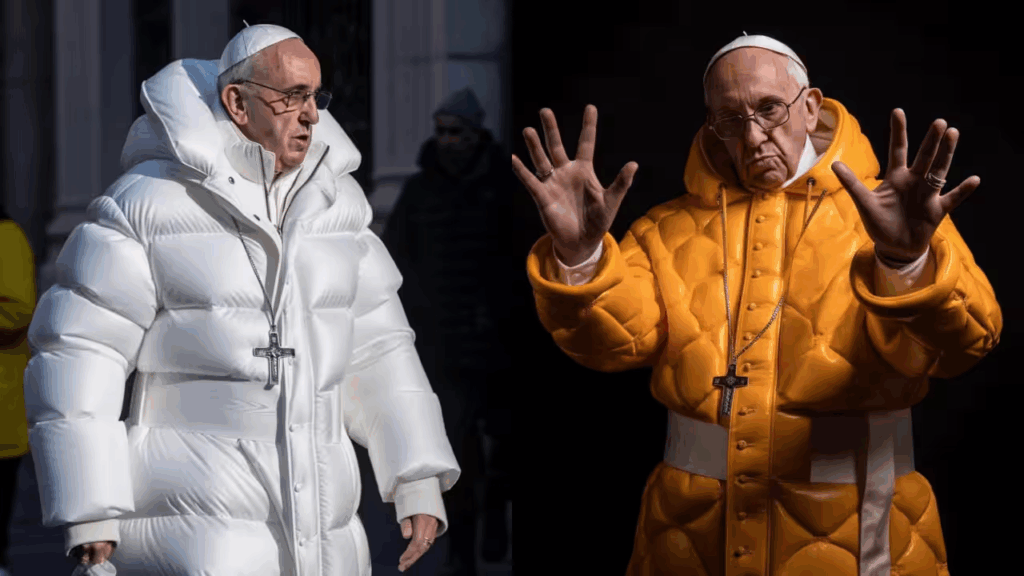
Pope Drip: A Look at the Pope’s Fashion Through the Years
When you think about the Pope, you probably picture an old guy in a big white robe waving from a balcony. But there is a lot more going on with what he wears than people realize. The Pope’s fashion has changed a lot over time. Some of it is really fancy. Some of it is super simple. And some of it honestly looks like something from a video game or a movie. This blog is going to break it all down. We’re going to go from the early days of the church all the way to today with Pope Francis and see how the Pope’s clothes tell us stuff about the church, about power, and about what the world expected at different times.
We’re going to keep this real and easy to understand. No crazy church language. No long history lessons. Just a deep dive into what the Pope wears and why it matters. And trust me, it does matter.
The Beginning of Pope Fashion
Back in the early days of Christianity, Popes did not wear anything that would make people stop and stare. Most of the early Popes just wore what the regular priests wore. This made sense because Christianity was still underground for a while. They were not trying to be flashy. They were trying not to get killed. It was all about being humble and keeping the focus on God, not on themselves.
Most of their clothes were made from simple cloth. Nothing with gold. No shiny shoes. No tall hats. Just basic stuff. But over time, the church got more powerful. And with more power came more attention. And with more attention came better clothes.
The Glow Up in the Middle Ages
By the time we get to the Middle Ages, things start getting a lot more extra. The church had a ton of power by then. It basically ran everything in Europe. Popes were treated like kings. So of course, they started dressing like kings too.
This is when we start seeing all the gold, the velvet, the fancy embroidery, and those really high pointy hats called mitres. The Pope’s outfit started to look more like a royal costume than a religious outfit. People thought that if the Pope represented God on earth, he should look the part.
One important piece from this time is the tiara, which is not a princess thing. The Papal tiara was a triple crown. That means it had three layers. It looked like a stacked cone of bling. It showed that the Pope had spiritual power, political power, and authority over the church. They really wanted to make sure people knew who was in charge.
Renaissance Era: Fashion Goes Wild
During the Renaissance, everything was about art and beauty and showing off. Popes were right in the middle of it. They were hiring artists like Michelangelo and Raphael to paint their chapels and ceilings. And yeah, they made sure they looked good doing it.
Popes in this time had outfits made from silk and covered in gold thread. Some even wore red velvet shoes. Not red like sneakers but deep red with gold crosses. This was all about looking holy and powerful at the same time. A lot of their clothes were custom made and super expensive.
You also start seeing Popes wear more layers. They had long capes called cappa magna that dragged behind them for like 20 feet. These were only worn on special occasions. They didn’t exactly go walking around Rome wearing these giant things. But when they came out, people noticed.
The Baroque Period: Even More Extra
The church didn’t slow down with the fashion in the 1600s and 1700s. If anything, it got even more dramatic. During the Baroque period, Popes wore clothes that were all about drama and detail. Big collars, giant capes, crazy detailed embroidery. Everything had meaning. Even the colors were chosen carefully. White for purity. Red for sacrifice. Gold for holiness.
Some people started to think this was too much. There were complaints that the church was focusing too much on appearances and not enough on helping people. But the Popes kept dressing big. At this point, the Pope’s fashion was a mix of politics, religion, and art all in one.
The 1800s: Trying to Stay Relevant
In the 1800s, the world was changing fast. Governments were getting stronger. People were rebelling. There were wars and revolutions everywhere. The Pope started losing political power. He wasn’t the boss of Europe anymore. But he still had a lot of religious power. So fashion became one way to keep that image alive.
Popes in the 1800s still wore the big robes and tiaras. But there was more focus on tradition. They were trying to remind people of the old glory days. The clothes were like a message saying hey we’re still important. Even if the world was changing, the Pope wanted to stay looking like a timeless figure.
Pope Pius XII and the 1900s
Pope Pius XII was known for being really serious and traditional. He liked keeping the old styles alive. He wore the tiara, the fancy robes, and all the classic stuff. But something started to change during and after World War II. People were looking for hope, not just tradition. So fashion slowly started shifting again.
By the time we get to Pope John XXIII and Pope Paul VI, there is a big change. Pope Paul VI was the last Pope to wear the triple tiara. After that, they stopped using it. It was seen as too royal and not humble enough.
Enter Pope John Paul II
Pope John Paul II is one of the most famous Popes ever. He was the Pope from 1978 to 2005. That’s a long time. He traveled all over the world and met with millions of people. His fashion was a little more chill than some of the Popes before him. He wore the regular white robe called the cassock, but he kept it simple. No tiara. No giant cape. He wanted to be seen as close to the people.
Still, he had style. He wore a red cape called a mozzetta on formal occasions and his red shoes became iconic. But overall, he was less about fashion and more about connection.
Pope Benedict XVI: The Return of Fancy
After John Paul II passed away, Pope Benedict XVI took over. And right away, people noticed something. He liked fashion. He brought back some older styles like the red velvet shoes and the embroidered mozzetta. He even brought back a fluffy hat called the camauro that hadn’t been worn in like 200 years.
People started calling him the “Prada Pope” even though his shoes weren’t actually Prada. Still, he brought attention to the idea that the Pope could be fashionable and still spiritual. Some people loved it. Others thought it was too much.
Pope Francis: The Fashion Breaker
Now we get to Pope Francis. He became Pope in 2013 and everything changed again. Francis is not into fancy clothes. At all. He is all about being humble and close to regular people. On the day he became Pope, he didn’t wear the gold and red outfit that most Popes wear. He came out in plain white and waved quietly. That told the world something right away. This Pope was going to be different.
Francis wears the simplest version of the cassock. He doesn’t wear red shoes. He wears black ones. His cross is made of simple metal instead of gold. He doesn’t wear the papal tiara or the big cape. Even when people offer him fancy outfits, he turns them down. He wants the focus to be on the message, not the clothing.
But that doesn’t mean he’s not stylish. His style is in the way he keeps things simple. It’s a message. He’s saying that the church should serve the poor and help people. Not show off. His fashion choices are about being real. And that has made a huge impact.
What Do the Clothes Actually Mean
Pope fashion is not just for looks. Every part of what they wear has meaning. The white cassock means purity. The sash around the waist is called a fascia and it represents discipline. The red mozzetta means the willingness to sacrifice. Even the shoes used to mean walking in the path of Jesus.
The mitre, which is that tall pointy hat, is used during special church services. It shows authority but also the idea of being connected to God. The pallium is a white scarf with black crosses that shows the Pope is the shepherd of his people.
These pieces are old and filled with history. Even when Popes don’t wear them anymore, they still matter.
It’s hard to say what Pope fashion will look like in the future. If more Popes follow the style of Pope Francis, we’ll probably see more simplicity. More focus on helping people. Less gold and velvet. But there is always a chance that the next Pope will bring something different. Maybe someone will mix old tradition with new values.
What’s clear is that people care about what the Pope wears. It’s not just about fabric. It’s about power, faith, history, and how the Pope wants to connect with people. Clothes are one way he sends a message without even talking.
Final Thoughts
Pope fashion is not just something you laugh about on the internet. It’s serious. It shows how the church sees itself. It shows how the Pope wants to be seen. From simple robes in ancient times to gold-covered capes in the Renaissance to the down-to-earth vibe of Pope Francis, it’s been a long journey.
Every piece of clothing tells a story. It tells us about the time, the culture, and the message. Pope Francis may not wear the flashiest stuff, but his outfit might be the most powerful of all because it says I’m here to serve.
And that’s what really matters.