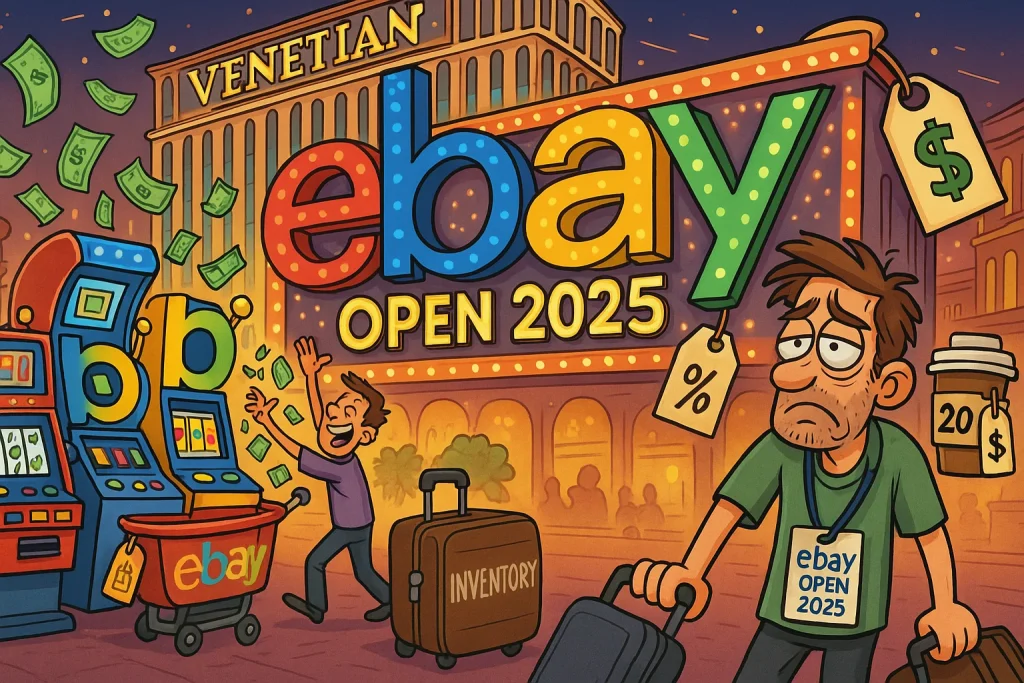
eBay Open 2025: Who Do They Think We Are? A Reality Check on Pricing
The Sticker Shock That’s Got Everyone Talking
When eBay announced their 30th anniversary celebration with eBay Open 2025, sellers were excited. Finally, an in-person event again! Then the pricing dropped, and the excitement turned into disbelief. eBay Open 2025 will take place August 12-14 at the Venetian Resort in Las Vegas, with tickets costing $295 for the in-person event. But that’s just the beginning of what could become a financial nightmare for the average seller.
Let’s be honest here. Who exactly does eBay think their average seller is? Because based on these prices, they seem to think we’re all rolling in cash like high-stakes poker players on the Vegas Strip.
Breaking Down the Real Cost
The Ticket Price Reality
The $295 ticket price includes access to the 3-day event including keynotes, sessions, expo hall, happy hour and closing party, hosted meals, and eBay swag. For some context, that’s more than what many sellers make on eBay in a good week. And that’s before you even think about getting to Vegas.
Hotel Costs That Will Make You Cry
eBay has negotiated a “discounted” rate at The Venetian of $145 per night, plus a $50 resort fee and $26.09 in taxes, bringing the total to $221.09 per night. For three nights, you’re looking at over $660 just for a place to sleep.
To put this in perspective, the average hotel cost in Las Vegas is $171 per night according to the Las Vegas Convention and Visitors Authority. So eBay’s “deal” is actually $50 more per night than the city average, before you even add in those resort fees and taxes.
Flight Costs to Consider
Getting to Vegas isn’t cheap either. An average direct flight to Las Vegas costs about $300 per person in 2025, though this can vary widely depending on where you’re flying from. Flights can range from $672 to $1,050 for economy flights depending on timing and location.
The Hidden Expenses Add Up Fast
Once you’re in Vegas, the expenses don’t stop. Budget travelers can expect to spend around $139 per day, while mid-range travelers typically spend around $369 per person per day. This includes food, transportation, and basic entertainment.
Food costs in Las Vegas range from $15-30 per meal for casual dining, with fine dining costing $75-200 per person. Even if you stick to budget options, you’re still looking at $45-90 per day just for food.
The Grand Total That Will Shock You
Let’s do some realistic math for an average seller attending eBay Open 2025:
Ticket: $295 Hotel (3 nights): $663 Flight: $400 (conservative estimate) Food: $180 (3 days at $60/day for budget meals) Transportation: $100 (airport transfers, getting around) Miscellaneous: $150 (tips, incidentals, maybe one drink)
Total Cost: $1,788
That’s nearly $1,800 for a three-day business conference. For many eBay sellers, that represents weeks or even months of profit. A typical three or four-day weekend in Vegas for two people costs $1,000-$3,000, and eBay sellers are being asked to spend that much individually just for a business event.
Who Is eBay’s Target Audience Here?
This pricing structure suggests eBay believes their seller base consists primarily of high-volume power sellers who can easily absorb these costs as business expenses. But that’s not the reality for most of us.
The average eBay seller is not a million-dollar business owner. We’re:
- Part-time sellers supplementing our income
- Small business owners trying to make ends meet
- Retirees selling collectibles to boost their fixed income
- Students or side-hustlers trying to pay down debt
- Regular people clearing out their homes and turning it into extra cash
For these sellers, spending $1,800 to attend a conference is absolutely unrealistic. That money could buy inventory for months, pay for shipping supplies for a year, or cover the business expenses that actually matter to day-to-day operations.
The Vegas Location: Luxury Over Accessibility
The choice of Las Vegas, and specifically The Venetian, sends a clear message about eBay’s priorities. The Venetian is known for hosting high-end entertainment with some shows averaging $959 per ticket. This isn’t exactly the down-to-earth, accessible venue you’d expect for a seller conference.
Vegas is expensive by design. It’s built to extract money from visitors through every possible channel. January and February are typically the cheapest months to visit Vegas, but eBay chose August, when the city is at its most expensive due to summer travel demand.
The message this sends is that eBay views their sellers as customers to extract money from, rather than partners to support and nurture.
Limited Tickets: Creating False Scarcity
What makes this even more frustrating is that eBay won’t be releasing additional tickets for the in-person event and expects only 1,300 sellers to attend. They’re creating artificial scarcity for an overpriced event.
This isn’t about logistics or venue capacity. The Venetian can handle much larger events. This is about exclusivity and premium pricing. They want to create a sense that this is a special, elite event that only serious sellers can afford.
The Virtual Alternative: A Band-Aid Solution
eBay offers a virtual attendance option at no charge, which is great for those who can’t afford the in-person experience. But let’s be honest about what this really means. The virtual format will include keynote presentations and sessions, but you’ll miss out on the networking, one-on-one meetings with account managers, and the social aspects that make in-person events valuable.
The virtual option feels like a consolation prize. It’s eBay saying, “If you can’t afford to play with the big kids, you can watch from the sidelines.”
What This Says About eBay’s Relationship with Sellers
This pricing structure reveals a concerning shift in how eBay views its seller community. Instead of recognizing sellers as the backbone of their business who deserve support and investment, they’re treating us like customers who should be grateful for the opportunity to spend our money on their event.
Compare this to other business conferences in different industries. Most legitimate business events that truly want to support their community offer:
- Early bird discounts
- Multiple pricing tiers
- Scholarships or reduced rates for small businesses
- Group discounts
- Local venue options to reduce travel costs
eBay has done none of this. Instead, they’ve created a premium-priced event in one of the most expensive cities in the country.
The Disconnect Between Seller Reality and eBay’s Expectations
Here’s what eBay doesn’t seem to understand: the majority of their sellers are not living lavish lifestyles. We’re regular people trying to build sustainable businesses or supplement our income. When eBay raised their fees earlier this year, sellers felt the pinch. eBay adjusted final value fees in most categories in February 2025, with increases ranging up to 0.35%. Every fee increase affects our bottom line.
Now they want us to spend nearly $2,000 to attend their conference? The math doesn’t add up, and it shows a fundamental misunderstanding of their seller base.
Alternative Ways eBay Could Have Done This Right
If eBay truly wanted to celebrate their 30th anniversary with their seller community, here are some approaches that would have made more sense:
Multiple Locations: Host smaller regional events in major cities across the country, making attendance more accessible for sellers nationwide.
Sliding Scale Pricing: Offer different ticket prices based on seller volume or store subscription level.
Scholarship Program: Provide reduced-price or free tickets for small sellers or those just starting out.
Practical Venue Choice: Choose a conference center in a more affordable city where hotel and travel costs wouldn’t be prohibitive.
Focus on Value: Instead of expensive venues and elaborate parties, focus on practical workshops and tools that actually help sellers succeed.
The Message This Sends to New Sellers
Imagine you’re a new seller trying to decide whether eBay is the right platform for your business. You hear about this big seller conference and look into attending. The price tag immediately tells you that this platform is for people with deep pockets, not for regular folks trying to build something.
This pricing creates an exclusionary environment that goes against the entrepreneurial spirit that eBay was supposedly built on. The platform that once prided itself on helping regular people start businesses is now pricing out those same people from its premier event.
What Sellers Are Really Saying
While official seller reactions in eBay’s forums might be filtered, the real conversations are happening elsewhere. Sellers are expressing frustration, disappointment, and feeling undervalued. Many are questioning whether eBay still cares about small and medium-sized sellers, or if they’re only interested in courting the big players.
The sentiment is clear: this pricing feels like a slap in the face to loyal sellers who have supported the platform through thick and thin.
The Broader Industry Context
Let’s compare this to other e-commerce platforms and their seller events:
Amazon’s seller conferences, while also expensive, offer more value and better pricing structures. Etsy focuses on affordable virtual events and regional meetups. Even newer platforms understand that supporting sellers means making education and networking accessible.
eBay seems to be moving in the opposite direction, creating barriers instead of bridges.
Practical Alternatives for Sellers
For sellers who want to invest in their business education but can’t justify the eBay Open costs, consider these alternatives:
Local Business Conferences: Many cities host small business and entrepreneur conferences at a fraction of the cost.
Online Courses: Invest that $1,800 in online courses, tools, or inventory that will actually impact your business.
Seller Facebook Groups: Join active communities where sellers share tips and strategies for free.
YouTube and Podcasts: There’s a wealth of free educational content from successful sellers.
Local Networking: Connect with other sellers in your area through meetups or small business groups.
The Long-term Impact on Seller Community
This pricing strategy could have lasting effects on eBay’s relationship with their seller community. When sellers feel excluded from the main event, it creates resentment and a sense that the platform doesn’t value their contribution.
The sellers who can afford to attend will likely be the high-volume sellers who already have eBay’s attention. The smaller sellers who could benefit most from networking and education are the ones being priced out.
This creates a two-tiered system where information and opportunities flow to those who already have resources, while smaller sellers are left behind.
What This Means for eBay’s Future
eBay’s approach to this event reflects their broader strategy and priorities. If they’re willing to price out their core seller base for a single event, what does that say about their long-term commitment to supporting small and medium sellers?
Platforms that prioritize inclusivity and seller support tend to see better long-term growth and loyalty. Those that focus on extracting maximum revenue from every interaction often find themselves with declining engagement and community trust.
A Wake-Up Call for eBay
This pricing controversy should serve as a wake-up call for eBay’s leadership. The seller community is the foundation of their business. Without sellers, there is no eBay. Treating sellers as an afterthought or as customers to extract money from is a dangerous path.
eBay built its reputation on being the platform where anyone could start a business. That democratic approach to e-commerce was their competitive advantage. Moving away from that inclusivity could be a strategic mistake with long-term consequences.
Moving Forward: What Sellers Can Do
As sellers, we have more power than we might realize. Our choices about which platforms to support and how to spend our business resources send a message to eBay about what we value.
Consider the following actions:
Vote with your wallet: If you disagree with the pricing, don’t attend. Low attendance numbers send a clear message.
Engage in feedback: Use eBay’s official channels to express your concerns about accessibility and pricing.
Support alternatives: Consider diversifying your selling platforms or investing in other business development opportunities.
Build community: Connect with other sellers who share your concerns and support each other’s businesses.
Focus on your business: Instead of spending money on an overpriced conference, invest in your inventory, tools, or skills that directly impact your bottom line.
The Bottom Line
eBay Open 2025’s pricing is a clear indication that eBay has lost touch with their seller community. The nearly $2,000 total cost to attend is unrealistic for the majority of sellers and sends a message that only high-volume sellers are valued participants in eBay’s ecosystem.
This isn’t just about one expensive conference. It’s about what this pricing represents: a shift away from the inclusive, entrepreneurial spirit that made eBay successful and toward an exclusive, premium model that leaves most sellers behind.
The question every seller should be asking is: if eBay doesn’t think we’re worth investing in with reasonable pricing for their flagship event, why should we invest our time and energy in their platform?
eBay’s 30th anniversary should be a celebration of the millions of sellers who built their business. Instead, it’s become a reminder of how disconnected the company has become from the people who made their success possible.
The message is clear: unless you’re a big player with deep pockets, eBay doesn’t think you belong at their table. That’s not the platform most of us signed up for, and it’s not the future most sellers want to support.
Maybe it’s time for eBay to remember that their sellers aren’t just customers to extract money from, but partners who deserve respect, support, and accessible opportunities for growth. Until they do, events like eBay Open 2025 will continue to feel more like exclusion than celebration.